- +233209032280
- Monday to Friday: 9am to 5pm

Archive for acecn
22Mar’25
BREAKING THE 90/10 SYNDROME IN RESIDENTIAL REAL ESTATE DEVELOPMENT IN GHANA: THE CAUSES, EFFECTS AND RECOMMENDATIONS
BREAKING THE 90/10 SYNDROME IN RESIDENTIAL REAL ESTATE DEVELOPMENT IN GHANA: THE CAUSES, EFFECTS AND RECOMMENDATIONS Published: April 2025 Author: Daniel Kontie Category: Real Estate Naturally by basic economic theory, a higher demand for a given commodity presents an opportunity to supply same based on the principle of single variable effect; however, the reverse appears to be the case when it comes to real estate investment in Ghana. Many would wonder why real estate investors in Ghana neglect the huge demand for low-end residential properties (social housing) by the over 90% of the Ghanaian population, to concentrate on the less than 10% of the population whose property demands are high-end (luxury). In other words, why the average Ghanaian real estate investor neglects the supply of the over 1million social housing units in demand whilst attention is paid to the development of luxury properties in demand by less than 10% of the population. The purpose of this article is to unravel and bring to bare the existence of the 90/10 syndrome, its causes, effects and to offer recommendations to stakeholders. To put the discussion into context, let me give you a data-driven exploration of the population and income distribution of Ghana. This will give you insight on how we arrived at the 90/10 syndrome; a perfect description in our opinion, of the status quo and the subject of this article. Taking a close look at the Ghana population and income distribution as at December 26, 2024 according to Woldometer, Ghana’s population stood at approximately 34,735,161. Out of this number, about 5% constituted the affluent class (most often, entrepreneurs). This class typically earns more with average net worth or investable assets between USD$100,000 to USD$200,000 or more per annum whilst about 46% constituted the middle class-upper who earns an average income or investable assets between USD$30,000 to USD$50,000 or more per annum, the middle class-lower constituted 24.7% of the population with average income or investible assets between USD$2,400 to USD$3,600 per annum and the poor constituting about 24.3% earning an average income of USD$400 or less per annum. Now, taking a retrospective look at the average prices of luxury properties in Ghana particularly, the capital city Accra, and its surroundings which are normally townhouses that sells averagely between USD$180,000 to USD$500,000 depending on the location, number of rooms or amenities etc and juxtaposing that with the aforementioned population and income distribution statistics, one would have given us credit for being charitable with the description that the percentage of the Ghanaian population that can afford the average luxury property that sells between USD$180,000 to USD$500,000 is 10% or less. Having established this fact, the Africa Continental Engineering & Construction Network conducted a further study to empirically substantiate the existence of the 90/10 syndrome that, real estate investors in Ghana neglect the supply of the over 1million social housing in demand whilst attention is concentrated on luxury development only in demand by less than 10% of the population. In a field study that lasted for one year, we sampled one hundred (100) developers in Accra, both corporate and non-corporate. It is interesting for one to know in our findings that, out of the 100 developers, 95% (95) of them are into high-end property development whilst the remaining 5% (5) does a mix or only social housing. Apart from this, we also went a step further to explore the one hundred and forty (140) members of the Ghana Real Estate Developers Association (GREDA) in good standing as at 2023 (GREDA Real Estate Journal, Issue 6, 2023), whose core businesses are housing (remember, it’s not all GREDA members that build houses) and it also came to our surprise that, there is a gradual and surreptitious swift in the property development portfolio of many of these members in this category from either social housing or mid-end to high-end properties. Now the multi-million dollar question is why will the average profit orientated investor neglect such a huge demand for social housing and focus only on the top 5% of the population. This brings the discussion to where we examine the genesis of this paradox, the causes. The Causes Even though there is a high demand for social housing by the 90%, the sector is neglected by developers because the middle class is unable to make outright payment or significant bulk payments for properties unlike the top 5%, even though they can afford if given a flexible installment payment plan. This has made investing in this sector unattractive because the investor in question will have to complete the property development 100% and sell it out to this class of buyers on an installment payment basis for a reasonable period of time. This development model automatically puts the developer in waiting for several years for him to recoup his investment. The flipside of this also is that, the developer risks losing his capital through exchange rate depreciation or better still inflation if he does not quote the property price in US dollars. Even with the few who may take this risk, chances are that, interest will have to be added to the property price as a hedge against inflation and the fluctuating prices of building materials over the construction period. This eventually prices out the average middle class from acquiring these properties making the property difficult to sell, hence locking up capital of the investor. Mention is not yet made about the high chances of default on payments and project delivery timelines by both parties that may lead to frustrations and legal stalemates. The above and many other factors have made investment in this category unattractive to many real estate investors in Ghana, hence the paradigm shift to luxury residential property development by the mass majority of developers in recent times. Taking the above analysis into consideration, the developer will naturally go for the luxury development where the top 5% category has the affordability to either make outright payment or do significant bulk payments
13Mar’25
Controlling Speculative Land Price Inflation in Ghana
Controlling Speculative Land Price Inflation in Ghana CONTROLLING THE SPECULATIVE LAND PRICE INFLATION IN GHANA: A PREREQUISITE TO A SUSTAINED HOUSING AND INFRASTRUCTURE PRICE STABILITY Having worked as a built environment and real estate professional gathering data and attending industry conferences, summits, workshops et cetera, I have had access to several platforms where issues that bother on the built environment were discussed, key among which were the housing and infrastructure crises we face as a country. Quite interesting however, the recommendations many stakeholders gave as proposed solutions to the housing and infrastructure crises were always same and predictable. It has always been about the need for government to give tax incentives to importers of building materials so that prices could drop to ease the cost of housing and infrastructure development whilst others proposed the use of local building materials etc. But it does appear that, no one is interested in discussing the land price bubble, a significant variable in the equation that we all watched unconcerned over the years to deteriorated from bad to worst and from worst to desperate, almost becoming an issue of national security threat in recent times. Having thought through the gravity of the disruption this may cause, I decided to put the subject up for discussion in October, 2024 on one of the industry platforms. The concern was the arbitrary and uncontrollable land price hikes occasioned by speculative perceptions at the expense of substance pushing the prices of land, housing and general infrastructure out of reach of the masses particularly, the ordinary Ghanaian citizen. Several arguments came up but in the end, the inferences that one could draw from a summary of the whole debate points to one conclusion that, there was nothing the government or anyone could do about it and that the situation will persist and may continue ad infinitum. But some of us have always thought differently, contrary to the popular opinion that this market failure cannot be corrected. But before we go into the substance of this subject today, it is important for me to let you appreciate the gravity of this problem at hand using Tema Community 25 enclave as a practical case study. In 2019, the price of a titled land 70ftx100ft sells at an average price of Ghs 10,000. Fast forward in 2020, it sold at an average price of Ghs 22,000. In 2021, same piece of land sold at an average price of Ghs 50,000 and in 2022, it went up to an average price of Ghs 110,000, and reaching unprecedented levels of Ghs 230,000 in 2023 and in 2024 same sold at an average price of Ghs 470,000 or more. Estimating the monetary and percentage change in prices between the year 2019 and 2024, you will realized that the change in price between 2019 and 2020 is Ghs 12,000 representing a 120% increase in price. Then, that between 2021 and 2022 was Ghs 70,000 representing an increase in price of about 140%, whilst 2023 and 2024 recorded a change in price of Ghs 120,000 representing a 105% rise in price. As it is clearly seen in the above analogy, there is a consistent over 100 percentage increase in the year-on-year prices from 2019 to 2024, meanwhile, one cannot really point to any significant change in any variable accounting for these skyrocketing prices, inner road networks still remains deplorable, high dust intensity around the enclave, both public and private amenities still the same, the old age heavy traffic situation on the stretch still remains unprecedentedly high etc. Isn’t this weird and interesting, anyway the future will depend on us, whether we take action now or ignore, the consequences, good or bad will live with us. Now, having identified and defined the problem let me bring you back to the average income statistics of the Ghanaian. According to salaries Ghana (2024) and Worldometer (2024), the lowest Ghanaian average take home income per month is Ghs 1,280; the average median take home income is Ghs 4,340 per month whilst the highest average take home income is Ghs 22,600 per month. Using the highest income earners as a case study even though the lowest and median income earners form the largest part of the Ghanaian population, let me predicate the analysis on the assumption that, the average highest income earner does not have any other source of income saves his job and is able to save 50% of this income (though not practical), with the intention to acquire a piece of land 70ftx100ft in Tema Community 25. By inferential analysis, it will take this person in question approximately 42years from 2025 to be able to raise Ghs 470,000 which is the current average land price in 2025. What this means is that, the 42nd year from now would be 2067at which time the land price would have increased approximately 100% by forty-two (42) times, holding other variables constant, far out of reach of the average Ghanaian, taking reference from the land price incremental analysis in paragraph 4 of this article. With this analysis, it is obvious that, the lowest and median income earners do not even come into the picture. Taking inspiration from the above, we also decided to do a cost build-up in last quarter of 2024 out of curiosity to compare the cost of building a simple 2bedroom house to the price of a raw land in same Tema Community 25 using some selected local building materials. The cost comparative analysis was based on the assumption that one is able to build this 2bedroom house in a space of 90days. The 90days assumption was to mitigate the possibility of general price rise of building materials that may be significant enough to blow the estimate out of proportion. But to our surprise, we realised that the Ghs 470,000 could build a 2bedroom house with a little balance to take home. Today, we have reached a point where the prices of raw land even in developing areas within the
13Mar’25
The Transformative Role of an Integrated African Built Environment
The Transformative Role of an Integrated African Built Environment THE TRANSFORMATIVE ROLE OF AN INTEGRATED AFRICAN BUILT ENVIRONMENT IN ACHIEVING SUSTAINABLE DEVELOPMENT OF THE CONTINENT: A POSSIBILITY OR A MIRAGE Generally, the concept of integration is basically the process of combining different components into a single unit or system for ease of use, identification, uniformity, economy and most importantly, wider accessibility. The concept has proven to be very effective across industries and professions, eg Engineering, Information Technology, Economics, etc. The information age has made the world a global village making integration no longer an option but a sine qua non for transforming systems, professions, industries etc in all sectors of an economy. The built environment being the engine of growth for every economy across the globe is not an exception to this fundamental fact. The objective of this article is to examine the transformative role an integrated African built environment can play in attaining a socio-economic transformation of the continent. Africa, a continent of vast natural resources and cultural diversity, stands at a critical juncture in its developmental trajectory as rapid urbanization, population growth, and economic diversification reshape its future, the built environment emerges as a cornerstone in this transformation agenda. By integrating the built environments across Africa, we can create a unified framework for socio-economic transformation that addresses the continent’s unique challenges while unlocking its immense potential for global pre-eminence. The built environment has a significant transformative role in the development of a continent citing the European Union as a classic example. In the EU bloc, the construction sector provides 18 million direct jobs and contributes to about 9% of the EU’s GDP. It also creates new jobs, drives economic growth, and provides solutions for social, climate and energy challenges, according to the European Commission (2023). Africa has not been able to realize the full potential of this sector, probably reason for its 97million estimated housing deficit coupled with the wide developmental gap it suffers compared to other peer continents across the globe (African Development Bank (AfDB, 2024). “The built environment is fundamental to accelerate economic development and social prosperity in Africa given its direct benefits and multiplier effects to the economy” (IFC, 2023). To address the African housing challenge, the International Finance Corporation recommended to stakeholders, a sustained commitment and “coordinated approach”. What do they mean by this coordinated approach?. Key among the IFCs recommendation of the need for a coordinated approach is the integration of the African built environment, the subject of this article, and one of the core objectives of the Africa Continental Engineering & Construction Network Ltd. The question now is, can Africa have an integrated built environment such that all professions in the built environment will have a common curriculum for training and professional certification examination for all professionals across the continent?. This will make a certified engineer in Ghana a certified engineer in Kenya, Nigeria, Egypt, Uganda, Rwanda, South Africa, Angola, Morocco, Algeria etc with just one common certification exam. Second, can Africa have a common standard, we may decide to call it the “Afrobuildcode” similar to the eurocode, which will be the universally accepted standard for the African built environment, such that quantities, metric systems etc will all be uniform and accepted among member states such that all building materials for example certified in Ghana by a standard will be accepted in Nigeria, Rwanda, South Africa, Kenya, Uganda, Angola, Morocco, Algeria, etc?. Third, can we have a standard system where all industry practitioners, both corporate and individuals will have same grading and classification system such that a D1 building contractor in Ghana will be recognized same in Nigeria, Kenya, Uganda, Rwanda etc. This will eliminate the existing needless and incompetent trade and professional bureaucracies whilst facilitating a robust cross border built environment trade and professional practice that has the potential of transforming the African built environment. What Would Be the Impact of an Integrated Built Environment on the Development of the Continent? A few among these are: Foster Investment A harmonized policy across member states makes it easier for international investors to navigate markets, promoting investments in housing, commercial real estate, transportation infrastructure and industrial zones et cetera. The ripple effect of this investment will create jobs for the labor-intensive working class of the built environment, and a coordinated approach can generate millions of jobs, especially for Africa’s growing youth population. Collaborative Investment Also, an integrated African built environment can lead to collaborative investments among African states, investors, industry practitioners etc to reduce financial burdens on individual nations. Projects like the Grand Inga Dam in the Democratic Republic of Congo, envisioned to power multiple countries, demonstrate a practical benefit of shared infrastructure through integration. This also has the potential of ensuring equitable distribution of development as underdeveloped areas can benefit from cross-border infrastructure, reducing regional disparities. Skills and Technology Transfer Besides, an integrated built environment will facilitate easy built environment technology transfer across the continent, evening the skills, technology and developmental gaps among member states. Capacity Building Last but most important is capacity building, integrating the built environment will facilitate mergers between industry players, this will lead to bigger and more resilient African construction firms that will have the capacity to undertake complex projects across the continent. This will also change the status quo, the proliferation of multinational firms that have taken over the African built environment over the years. It will also lead to more mutually beneficial collaborative relationships between the African construction firms and their multinational counterparts than it is now. Take for example the capacity we can build if we should have a merger or collaboration between Dutum Construction Company of Nigeria, Joshob Construction in Ghana and Trencon Construction in South Africa. The synergy created can grow into giant African built environment consortiums across the continent. Conclusion In conclusion, sight is not lost of a few possible challenges of this integration agenda, however, that will be dealt with in subsequent editions. But the bottom line remains that, the
04Dec’24
THE GRAND SUCCESS OF THE JUST ENDED 2ND AFRICAN CONTINENTAL ENGINEERING, ARCHITECTURE, CONSTRUCTION AND REAL ESTATE SUMMIT (ACEACRES, 2024)
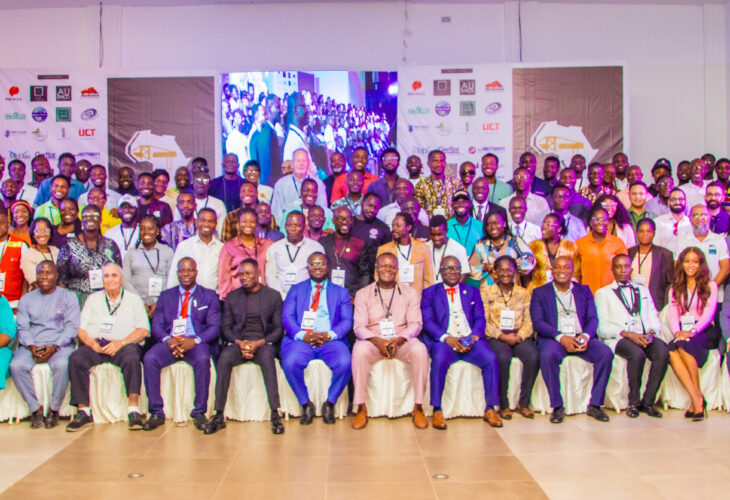
THE GRAND SUCCESS OF THE JUST ENDED 2ND AFRICAN CONTINENTAL ENGINEERING, ARCHITECTURE, CONSTRUCTION AND REAL ESTATE SUMMIT (ACEACRES, 2024) THE GRAND SUCCESS OF THE JUST ENDED 2ND AFRICAN CONTINENTAL ENGINEERING, ARCHITECTURE, CONSTRUCTION AND REAL ESTATE SUMMIT (ACEACRES, 2024) So soon the long-awaited 2ND AFRICAN CONTINENTAL ENGINEERING, ARCHITECTURE, CONSTRUCTION AND REAL ESTATE SUMMIT themed, “INTEGRATING SUSTAINABLE BUILT ENVIRONMENT FOR SOCIO-ECONOMIC TRANSFORMATION THROUGH THE USE OF NEW GENERATION TECHNOLOGY AND GENERATIVE ARTIFICIAL INTELLIGENCE” has come to an end, 5pm on November 28, 2024, at Berliner Platz Conference Centre-East Legon, Accra, Ghana. The Summit brought together all stakeholders of the African built environment. It was indeed a time of introspection that examined the past, the present and projections into the future of the African built environment in this AI dispensation. The core mandate was to communicate to all stakeholders yet again, the urgent need to integrate the African Built Environment for Socio-Economic Transformation of the African Continent. It was by far Africa’s most impactful built environment and Real Estate Summit that brought together all sector players across the African continent and beyond to discuss industry best practices, modern innovations, and technologies that are shaping the future of built environments across the globe. The objective was to set the stage for the integration of the African built environment whilst creating the opportunity for more partnerships/collaborations and the promotion of sustainability for corporate growth and for the African continental prosperity at large. Key Participants ACEACRES, 2024 witnessed the gathering of a wide range of stakeholders in the built environment, including: The Summit recorded over 300 in-person participants from countries such as Nigeria, Uganda, and the USA, with the majority from Ghana. High-profile participants included notable industry leaders like: Key Issues Discussed Among the key issues discussed at the Summit were: Opportunities for Sponsors and Participants Sponsors had the chance to engage in B2B and B2C networking opportunities, connect with manufacturers, distributors, and potential investors, enhance brand visibility, and gain industry insights. Participants benefited from networking with industry leaders, gaining cutting-edge insights and trends, learning from successful case studies, and identifying new business opportunities. Event Partners Event partners included: Sponsors Principal sponsors included: Conclusion In his concluding remarks, Mr. Daniel Kontie, the convener and CEO of the organizing company, stressed the need to rotate the Summit across the African continent. He hinted at hosting the third edition in Ghana, with future editions potentially in Nigeria or Uganda. The Africa Continental Engineering & Construction Network Ltd (ACECN), the organizing company, aims to be among Africa’s top five built environment brands within the next 10 years, championing contemporary innovations and sustainability for the socio-economic transformation of the African continent. Contact Mr. Daniel Kontie Founder & Chief Executive Officer Phone no.: 0209032280 E-mail: d.kontie@acecnltd.com
22Oct’24
2nd African Continental Engineering, Architecture, Construction, and Real Estate Summit (ACEACRES) 2024
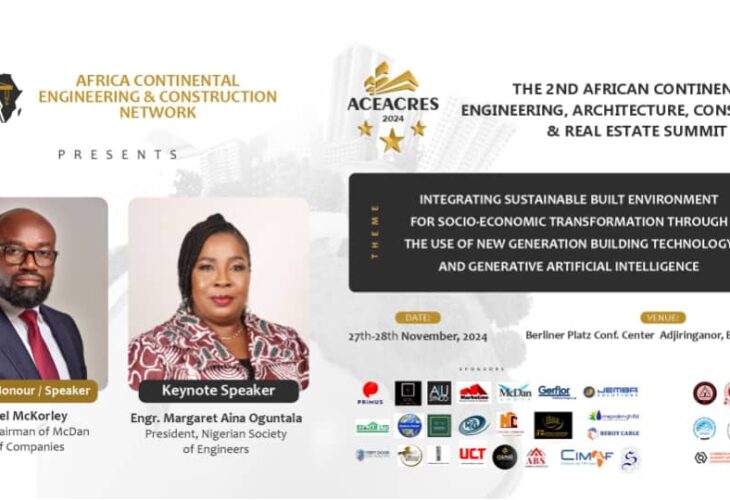
PRESS RELEASE FOR IMMEDIATE RELEASE About the 2ND AFRICAN CONTINENTAL ENGINEERING, ARCHITECTURE, CONSTRUCTION AND REAL ESTATE SUMMIT – ACEACRES 2024 Date: 27th November, 2024 Venue: Berliner Platz Conference Centre Adjiringanor-East Legon, Accra Objective of the Summit The African Continental Engineering, Architecture, Construction and Real Estate Summit (ACEACRES) is the annual convocation of all stakeholders of the African built environment. It is a time of introspection that examines the past, the present and the projections into the future of the African built environment in this dispensation of rapid artificial intelligence and technological expansion. The core mandate is to integrate the African Built Environment for Socio-Economic Transformation through the use of Innovative Engineering, Cutting Edge Building Technologies and Generative Artificial Intelligence. It is by far Africa’s most impactful built environment and Real Estate Summit that brings together all sector players across the African continent to discuss industry best practices, modern innovations and technologies that have the potential of changing the status quo for a resilient African Engineering, Construction and Real Estate Industry and by extension, creating a high-level business networking opportunity for all stakeholders both locally and across the globe. The objective is to set the stage for the integration of the African built environment whilst creating another opportunity for more partnerships/collaborations and the promotion of sustainability for corporate growth and for the African continental prosperity at large. Being the initiative and been organized by the Africa Continental Engineering & Construction Network Ltd in collaboration with the aforementioned industry stakeholders, ACEACRES is also blazing the trail in breaking the imaginary colonial boundaries placed on African states whilst uniting the continent for a common and robust built environment. Who to Attend All stakeholders in the built environment; the building contractors, road contractors, construction firms, engineers (civil, electrical, electronic, mechanical, structural, safety, mining, environmental, chemical, geotechnical, geodetic, materials), surveyors, planners, architects, project managers, land economists, real estate developers, builders, landscape professionals/contractors, real estate professionals, the diaspora community (home buyers), building and construction material/equipment suppliers, glaziers, fabricators, interior deco companies/professionals, roofing companies/technicians, transport & logistics companies, facility management professionals/institutions, banks/bankers, investors, insurance institutions, government agencies, regulators, IoT experts, construction legal consultants, artificial intelligence professionals, land economists, sustainability consultants, oil and gas marketing companies, research and technological service providing companies, artisans etc. Participants Confirmations Over 400 in-person and 100 plus virtual participants respectively are estimated and expected to be in attendance come, November 27 and 28, 2024, as the day for Africa’s biggest international built environment and real estate summit draws closer, confirmations are trickling in from Nigeria, Rwanda, Kenya, Uganda and South Africa. African Sub-region Some of the high profile in-person participants from the African sub-region who have confirmed their participation are, Engr Dr. Modasiru Bola J. (Principal Partner, Prolarank Nigeria Ltd and Secretary General of the Nigeria Institution of Highways and Transportation Engineers, Engr. Margaret Aina Oguntala, FNSE, National President, Nigerian Society of Engineers, Prof. Taddeo Rusoke of Uganda, a sustainability expert and conservationist, Engr. Ezrah Nyaega, of the Earl Group, Kenya, and Dr. Abdulhakkim Odegade, CEO, Akmodel Group, Nigeria etc. Outside Africa A confirmation for virtual participation has already been received from Canada, Australia, New Zealand, the United Kingdom as well as the United States of America. Benefits to be Derived by Participants Sponsors: B2B, B2C networking opportunities, connecting with manufacturers, distributors, wholesalers retailers as well as end consumers, meet potential investors, enhance brand visibility and credibility, real time lead generation, gain industry insights eg dynamics and modern trends, identification of new business opportunities, opportunity for joint ventures, opportunity to close B2B contracts, seal partnership deals, boost brand development, maximize sales, share product knowledge and utility information with potential customers, demonstrate unique selling proposition to potential customers, build strong network with influential industry players, get in contact with the diaspora community and opportunity to get connected by organizers to top-rated projects /contractors/professionals in Ghana and across the African continent etc. Participants: Networking opportunities with industry leaders, access to cutting edge insights and new trends, learning from successful case studies, building personal capacity for resilience, exposure to new business opportunities, gaining inspiration and motivation from industry thought leaders, building relationship with potential employers/employees and mentors, access to innovative products, meeting with potential investors, opportunity to share your perspective during Q&A, meet the CEO of the Africa Continental Engineering & Construction Network and team for specific industry information and opportunities, identify lucrative business niches in the industry et cetera. Partners/Collaborators The event Partners include, the Ghana Institution of Engineering and Technology (IET-GH), the Association of Building and Civil Engineering Contractors of Ghana (ABCECG), the Ghana Electrical Contractors Association (GECA), Ghana Institute of Construction (GIOC), Certified Electrical Wiring Professionals Association (CEWPAG), Ghana Association of Real Estate Brokers (GAREB), Local Government Service Engineers Association (LoGSEA), Commercial Quarry Operators Association (COQOA), with Nimark Consult, and Culnad Construction Ltd, as construction firms among several others. Principal Sponsors The Principal Sponsors and partners of the event include, Gerflor Ghana Limited, flooring and wall finishing services providers, Meprolim Ghana Limited, a domestic and industrial cleaning service providers as headline sponsors. The rest are Premier Steel Ltd (one of Ghana’s biggest building material supplier), McDan Group (one of Africa’s top logistics and Aviation giant), Jemba Solutions Ltd road construction and pavement solutions service provider, Fort Doors, Ghana’s top security doors manufacturer and supplier, the Primus Group, oil and gas, industrial scale auto mechanical spare parts supplier… Event Opening Purpose of the Summit by: MR. DANIEL KONTIE, FOUNDER & CHIEF EXECUTIVE OFFICER OF THE AFRICA CONTINENTAL ENGINEERING & NETWORK LTD Guest of Honor and Speaker: DR. DANIEL MCKORLEY, EXECUTIVE CHAIRMAN, MCDAN GROUP OF COMPANIES Keynote Speaker: ENGR. MAGARET AINA OGUNTALA (FNSE), NATIONAL PRESIDENT, NIGERIAN SOCIETY OF ENGINEERS Contact for Media Inquiries Mr. Daniel Kontie Founder & CEO, Africa Continental Engineering & Network Ltd Phone no.: 0209032280 Email: d.kontie@acecnltd.com Website: www.acecnltd.com

18Dec’23
About Scale Up of Africa’s Sustainable Built Environment
ACECEN’s President Calls for Use of Modern Green Building Technologies A one-day maiden Africa Continental Sustainable Built Environment Industry Summit (ACEACFMS 23) ended successfully at East Legon, Ghana’s capital city of Accra on Thursday December 14, with a formal declaration of the event as an annual one. The declaration was made by Mr. Daniel Kontie President/CEO of the Africa Continental Engineering & Construction Network(ACECEN), Earlier in his welcome address during the event he said that, the African Built Environment must be placed in a position to transition from the current brown construction techniques to Green building technologies. “Like it or not, the reality is that, new trends are transforming the way the industry operates, from the design phase to the actual construction process, particularly at this time that the whole planet faces eminent dangers of climate change by virtue of our old industrial actions and inactions that has brought us to this global climate emergency situation”, Mr. Kontie added. “Africans have always argued that Africa’s contribution to the current climate change catastrophy is insignificant compared to the West, that is true, however, what we fail to appreciate is that the problem was significantly created by the West but the solution lies in the hands of Africa and this is another 21st century industrial revolution for Africa to take advantage of” he intimated. In a keynote speech delivered by Nana Obokese Ampah,,the Regent of Moree & Apagyahene of Asebu State on behalf Daasebre Kweku Ewusi VII, Omanhene of Abeadzi Traditional Council Area, Central Region, former Member of the Council of State, immediate past Vice President of National House of Chiefs, on the topic, “Land Dispute Resolution and Sustainable Land Acquisition for Sustainable Infrastructure Development in Ghana in the face of Climate Change” Nana noted that Ghana’s progress hinges on the delicate balance between development and environmental stewardship. “As we embark on transformative infrastructure projects, it is imperative that we adopt a holistic approach that not only address our immediate needs but also safeguard for land for future generations” Nana intimated. Sustainable land acquisition Nana underscored, must be the bedrock of Ghana’s endeavours. “We must ensure that every plot acquired for development aligns with environmental conservation principles. Incorporating green spaces, mitigating the impact on ecosystems, and adhering to sustainable construction practices are essential components of responsible land acquisition” Nana emphasized. Speaking on the theme: “Integrating Sustainable Built Environment Industry for Socio-Economic Transformation Through the use of Digital Twin Technologies”, the Immediate Past President of the Federation of African Engineering Organizations (FAEO), Ing. Mrs. Carlien Bou-Chedid said, the use of Digital Twin technology creates a virtual or digital replica of physical objects, processes or systems to allow for real-time monitoring, analysis and optimization. She explained that by leveraging Digital Twin Technology in the built environment, stakeholders can make more informed decisions, reduces costs, improve sustainability and enhance overall performance through the lifecycle of structures and cities. She gave examples of these digital twin technologies as Autodesk BIM 360, which is a cloud-based platform for construction management; Dassault Systemes CATIA, a software suite by Dassault that supports product design and engineering, which is often used in the architecture, engineering and construction (AEC) industry to create digital representations of buildings and infrastructure. She also mentioned Cityzenith 5D Smart World, which supports urban planning, infrastructure management and smart city initiatives. She added that Esri Urban Observatory also provides tools for creating digital twins of cities. Ing. Mrs. Carlien Bou-Chedid explained that Digital Twins rely on a network of sensors and devices strategically placed within the built environment to measure parameters, such as temperature, humidity, energy usage, water flow, air quality and more. She mentioned that Sustainable Built Environment is one that protects people, places and the natural environment. It also involves creating safe and welcoming spaces and designing for longevity, flexibility, recoverability and reuse. “Sustainable Built Environment also reduces building and urban infrastructure emissions for the long-term resilience of both people and planet. It is critical to reducing greenhouse gas emissions and tackling the climate crisis”, she concluded. Presentations Making a presentation on “Refocusing Ghana’s Flood Preparedness and Response for Socio-Economic Transformation through the use of Digital Twin Technologies”, Prof. Divine Ahadzie, Centre for Settlements Studies at the Kwame Nkrumah University of Science & Technology (KNUST), Kumasi said, Ghana experiences major floods every two years for the last 20 years but our preparedness is not getting any better. On recent VRA flood, the Prof. Ahadzie suggested that VRA should enhance their engagement with the communities by strengthening the use of twin-technologies plus to other community based technologies. He proposed a simplified community flood resilience framework to comprise the Chiefs, Assemblymen, MPs, NADMO, District Assembly, among others. STEM students from Kumasi Academy SHS, made an impressive presentation of their Smart Urban Gardening Initiative, a Green technology revolution. According to the students, the Smart Urban Gardening project integrates advanced technology and sustainable practices for urban agriculture. Panel Discussions A panel session discussion on local content and use of local materials featured Prof.Ing. Emmanuel Appiah-Kubi, Director of Quality Assurance & Accreditation, Akenten Appiah Menka University of Skills, Training & Entrepreneurial Development(AAMUSTED), and Prof.Engr. Humphrey Danso, Dean Faculty of Technical Education, also of the same university. They emphasized the important role bamboo could play in Ghana’s built environment industry and the dire need for using local earthen material and their combination with each other to strengthen them and to ensure their durability for use in the sustainable Built Environment industry. Prof.Ing Appiah-Kubi gave an expose on Ghana’s bamboo resources potential and the important role it serves to play in the country’s sustainable Built Environment Industry. He also disclosed that in addition to the generally known 250,000 species of bamboo worldwide, other bamboo species native to the Volta and Northern Regions with yellow coloration have been identified in their research Prof.Danso on his part, emphasized the need for using local earthen material and their combination with each other to strengthen them and to ensure their durability for use in the